
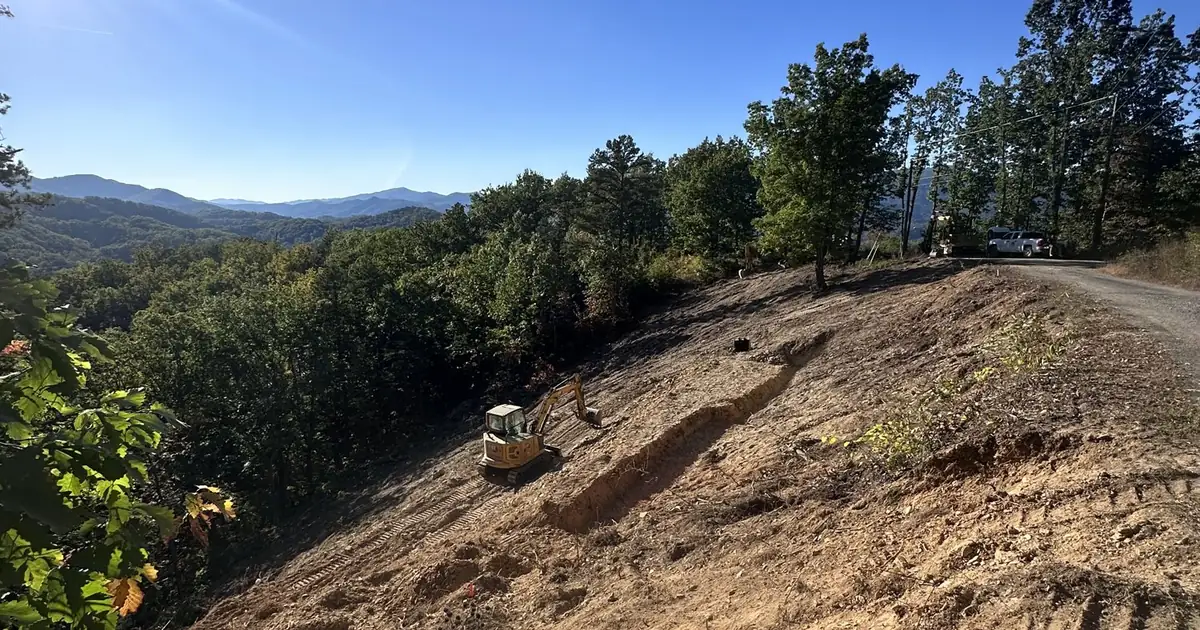
If you are planning to clear a wooded lot in East Tennessee this fall, the calendar matters more than most people expect. Cooler weather is easier on crews and equipment, and a lot that is cleared and graded in the fall can be ready for footers before spring building season picks up. There is also one date to know about before any brush gets burned: October 15.
This guide covers what to settle before clearing starts, how the burn-permit rule affects the plan, and what the jump from a cleared lot to a foundation looks like. It is written for homeowners, builders, and developers across Sevier, Jefferson, Knox, Blount, and Hamblen Counties.
Why Clearing Is the First Decision, Not the Easy One
Clearing looks simple from the road: trees come down, brush goes away, and you have a lot. In practice, it is the step that shapes everything after it. Where the pad sits, how water leaves the property, where equipment can enter, and where the driveway and utilities will run all get decided while the lot is still covered in trees.
Clearing is also where we start most of our own work. Kyle Pope has cleared lots for years, often as the first phase of a turnkey contract that runs from the cleared lot through the foundation. That experience is why we encourage owners to talk through the finished plan before the first tree comes down, not after.
The October 15 Burn-Permit Date
Clearing produces a lot of wood and brush, and what happens to it needs a plan. One common option is burning debris piles on site. In Tennessee, that comes with a seasonal rule. According to the Tennessee Division of Forestry, a burn permit is required for debris burning from October 15 through May 15 each year, and the state's wildfire law covers open-air fires within 500 feet of a forest, grassland, or woodland during that window.
For a wooded East Tennessee lot, that rule is easy to run into. Before you schedule a clearing job, settle two questions:
- What is the plan for the brush? Burning, hauling, or a mix of both each has different timing and cost implications.
- If burning is part of the plan, who is confirming the permit and the conditions on the day? Permits are issued by the state and conditions change, so check the current requirements with the Tennessee Division of Forestry before the job is on the calendar.
We are not telling you what the rules are for your parcel. We are telling you to ask early, because a brush plan that falls apart on clearing day can cost a week.
Fall Clearing Can Set Up an Earlier Start on the Build
A lot cleared in the fall gives the build a head start. Once the trees and brush are out, the ground is open for the work that has to come next: marking out the pad, rough grading, and getting a driveway or access road in so deliveries and equipment can reach the site.
It also gives you a chance to look at the lot honestly. A wooded lot hides slope, rock, and low spots. With the trees gone, you can see how water moves across the property and whether the plan for the house, a retaining wall, or a septic area still makes sense. That is much cheaper to learn before the foundation is poured than after.
If you are still deciding on a building location, this is the time to do it. We can walk the lot with you, talk through where a pad will sit best, and plan the clearing around that rather than around the fastest path through the trees.
Working Through the Winter in East Tennessee
Many people assume everything stops once winter arrives. In East Tennessee, that is mostly not the case. Kyle describes it plainly: we typically work straight through the wintertime. The things that slow a job down are specific:
- Cold on rocky sites. Much of this region is rocky. A hammer attachment on an excavator can only be used when it is 32 degrees or warmer, because below that it can break the bit.
- Wet ground. Saturated soil is hard to work and easy to damage.
- Snow on the ground. Snow is not common here, but when it sticks, it can stop site work.
The takeaway for planning is simple. If your lot is rocky and you expect to need a hammer, getting that rock work done before the coldest stretch of winter keeps the schedule predictable.
Walk the Lot Before the Machine Does
The cheapest time to change a clearing plan is before the first tree comes down. Walk the property with whoever is doing the work and mark what matters: the building footprint, the driveway route, any septic area, and the trees you want to keep. A few shade trees near the house site, or a tree line along a property edge, are easy to protect when they are marked and very hard to replace if they are not.
It also helps to think about where the machine will work from. On a steep lot, the order in which areas are cleared affects how safely equipment can move around, and where brush and logs get staged.
Bare Ground and Rain: Plan for Erosion
A cleared hillside has nothing holding the soil in place. East Tennessee gets heavy rain at times, and bare slopes can wash. When a lot has a noticeable grade, think about erosion before the lot is open, not after the first storm. Grading so water is directed where you want it, and getting the next phase of work started promptly, both help keep cleared ground from sitting exposed for long. If your site is near a creek, lake, or neighbor's property line, ask your county about any stormwater or erosion-control requirements that apply before clearing starts.
One Large Machine for Clearing
A lot of clearing is done with several smaller machines, which means more operators, more fuel, and more days on the property. We use a large piece of equipment built specifically for clearing. In Kyle's experience, one big machine can finish in a day or two what smaller equipment takes two or three days to do. Your actual timeline depends on the lot, the density of the trees, the slope, and the weather, so treat that as a general comparison and not a promise for your site.
Before Anyone Digs: Call 811
Clearing and grading often lead straight into digging, and in Tennessee you are required to contact Tennessee 811 before excavating. The standard locate request needs at least three working days' notice, so it belongs early on your project schedule. If you are planning a driveway, trench, or utility run after clearing, get the ticket in before the equipment shows up.
From Cleared Lot to Foundation
Clearing is rarely the end of the project. After the lot is open, the usual next steps are excavation and site prep, then footers and the foundation. We handle those steps ourselves: land clearing, excavation and site prep, and foundations. Keeping one team on the property means nobody has to rediscover the lot at each handoff.
If your project also needs septic or utilities, we can plan septic installation and utility work alongside the clearing so the site is laid out once and used well.
What to Have Ready When You Call
- The address or parcel location, and which county it is in
- A rough idea of how much of the property needs to be cleared
- What you plan to build or use the cleared land for
- Your timeline, including any date you need the lot ready by
- Your plan for the brush, if you already have one
We serve Sevier, Jefferson, Knox, Blount, and Hamblen Counties. To talk through a clearing project, send us a request and we will set up a time to look at the site.